Switching Sides: The Surprising World of Sidemount Diving
Switching Sides: The Surprising World of Sidemount Diving
Apr 29, 2025
Average Reading Time: 5min.
Table of Contents
- Unlearning the Usual: Why Sidemount Feels Like Rewriting the Rules
- Chapter 1: The Nuts and Bolts: Sidemount Gear Isn’t Just Techy, It’s Personal
- Chapter 2: Beyond Basics: Leveling Up with TDI Sidemount (and Getting a Bit Obsessive)
- Chapter 3: Finding Your Tribe: The Global SDI/TDI Community Isn’t Just Online—It’s a Family
- Chapter 4: Cookie Crumbs and Other Small Details: The Bits You Might Ignore (But Shouldn’t)
- Conclusion: The Details Make the Difference
Let’s rewind to a sun-bleached deck somewhere off Bonaire: a diver (let’s call her Jess) stares at two cylinders tethered to her hips, her usual tank nowhere in sight. This isn’t an equipment malfunction or a new TikTok challenge—Jess has just gone sidemount. What starts as an experiment soon reveals a corner of diving that’s equal parts practical and peculiar, a realm where training, equipment, and camaraderie take on strange new shapes. Here’s the untold story behind sidemount’s appeal and its unlikely community.
Unlearning the Usual: Why Sidemount Feels Like Rewriting the Rules
Breaking Old Habits
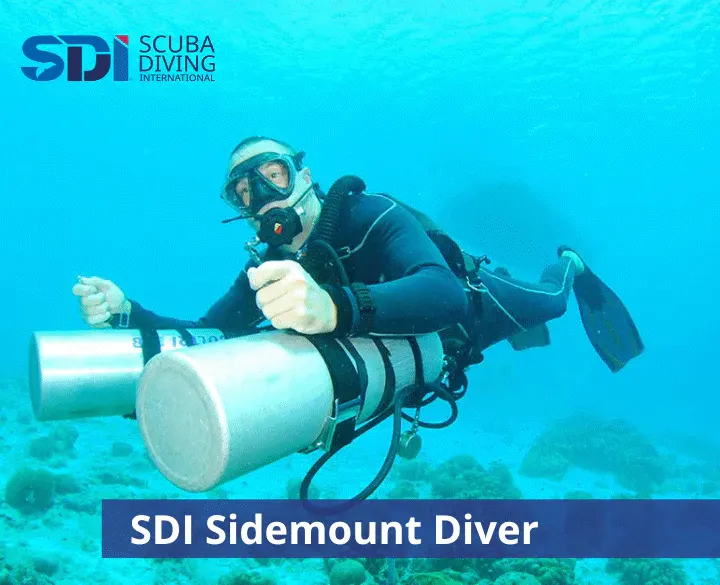
He’d spent years with a tank strapped to his back. Most divers do. The back mount is like a comfort blanket—familiar, sturdy, always there. But sidemount? That’s a different animal. The first time someone suggested it, Jess laughed. Why mess with what works?
Still, curiosity has a way of gnawing at people. Jess signed up for the SDI Sidemount Diver Course, not quite sure what to expect. The rules, it turns out, were about to change.
What Makes Sidemount So Different?
- Traditional divers cling to their back-mounted tanks. Sidemount asks them to let go—literally and figuratively.
- Gear is worn at the sides, not the back. This tweaks buoyancy, balance, and even how a diver moves underwater.
- Body awareness shifts. Suddenly, every kick, every twist, feels new. Sometimes awkward. Sometimes, oddly freeing.
Jess remembers her first descent. The cylinders kept bumping her knees. She felt like a toddler learning to walk. But then—mid-dive—she nailed a backwards kick. For a moment, she was weightless and in control. That was her aha moment.
'Learning sidemount felt like relearning how to dive, but with a new sense of freedom.' – Mark Powell
Who Can Make the Switch?
- SDI Open Water Scuba Diver certification (or equivalent) is a must.
- Minimum age? 18. Or 15, if a parent signs off.
No shortcuts. The course isn’t just a gear swap. It’s a mindset shift.
New Skills, New Language
- Hand signals become essential. Underwater, words are useless. Fingers do the talking.
- Gear checks get more complex. Two tanks, two regulators, more hoses. More to remember.
- Gas switches—not just a technicality, but a lifeline. Mess it up, and things get dicey.
- Unfamiliar entries. Rolling off a boat or wading from shore, sidemount style, takes practice.
Jess struggled at first. She missed the old routine. But with each dive, the awkwardness faded. The freedom grew.
The SDI Sidemount Diver Course isn’t just about equipment. It’s about unlearning what you thought you knew. For some, that’s scary. For others, it’s the best part.
The Nuts and Bolts: Sidemount Gear Isn’t Just Techy, It’s Personal
Obsession or Art? The Gear Choices Begin
He stood in the dive shop, staring at a wall of cylinders. Aluminum? Steel? Short and fat, or long and lean? Sidemount diving isn’t just about strapping tanks to your sides—it’s about choosing. Sometimes obsessively. Every diver faces the same puzzle: which cylinder, which regulator, which harness, which BCD? It’s like picking out ingredients for a secret recipe. And no two recipes ever taste quite the same.
Customization: The Tinkerer’s Playground
For sidemount students, customization is king. They’ll spend hours fiddling with weights, shifting D-rings, or adjusting bungee lengths. One diver might color-code clips with neon tape. Another might rig a bungee loop just so, for that perfect cylinder trim. It’s a wearable puzzle, and the right fit changes everything underwater—comfort, balance, even confidence.
He remembered the first time his harness felt “just right.” It was like finding the sweet spot in a hammock. Not too tight, not too loose. Just... right.
Drills: On Land, On Surface, Underwater
- Attaching and removing cylinders at depth? Check.
- Managing weights so you don’t tip sideways? Check.
- Switching gas supplies mid-dive, like a practiced magician? Check.
These drills aren’t just for show. They demand adaptability. Sometimes, things go sideways (literally). That’s when the real learning happens.
Guidance Down the Gear Rabbit Hole
The SDI/TDI eLearning module—priced at $144.15 USD—guides divers through this maze. But that’s just the start. Pool and open water sessions come extra, arranged through local dive centers. The online shop? It’s a treasure trove for sidemount gear, from harnesses to those tiny, life-saving bolt snaps.
She found herself scrolling late at night, comparing harness reviews. Was she overthinking it? Maybe. But in sidemount, that’s half the fun.
'No piece of gear is ever really "set and forget" in sidemount.' – Jill Heinerth
Diver ingenuity shines brightest in the little hacks: a labeled clip here, a custom bungee there. The SDI/TDI community encourages experimentation. Try, tweak, repeat. There’s no single “right” way—only the way that works for you.
Beyond Basics: Leveling Up with TDI Sidemount (and Getting a Bit Obsessive)
Chasing Depths, Chasing Mastery
They say sidemount is for the curious. For the diver who’s never quite satisfied with “good enough.” That’s where TDI’s Sidemount Diver Course comes in. It’s not just a class—it’s a rabbit hole. One that starts with a simple question: What if I could do more down there?
What Makes TDI Sidemount Different?
- Technical concepts: Gas matching, psychological prep, and equipment mastery. Not just theory—real, hands-on stuff.
- Performance upgrades: Think precise buoyancy. Advanced propulsion—frog kicks, helicopter turns, even backwards. Light signals for when the world goes dim and visibility drops to zero.
- Extra cylinders: Stage bottles, deco bottles. Carrying more gas, prepping for dives that last longer and go deeper. It’s a little intimidating at first. Then it’s addicting.
- Freedom: Certification means you sidemount unsupervised. As long as you stay within your training. No one’s looking over your shoulder. The ocean’s yours—well, sort of.
Who Gets In?
Minimum age? Eighteen. You need SDI Open Water or higher. No shortcuts. The course is tough—deliberately so. Students practice out-of-mask gas switches, navigation in tight spaces, and using lift bags. It’s not just about swimming; it’s about solving problems underwater, sometimes before you even realize there’s a problem.
Global, Accessible, and... a Little Addictive
TDI’s eLearning platform is everywhere—English, Português, Français, Español, Deutsch. Price? $144.15 USD for the online part. You’ll need to find a local instructor for the real-world dives. There’s something about reading about frog kicks in your living room, then trying them at depth, that feels surreal.
‘Sidemount is a gateway skill. Once you start solving those in-water puzzles, you can’t stop.’ – Steve Lewis
What Happens Next?
After certification, divers are eligible for more: cave, CCR, advanced tech. The TDI Sidemount Diver Course is a launchpad. Some say it’s the start of an obsession. Maybe they’re right. One thing’s for sure—once you’ve felt that freedom, it’s hard to go back.
Finding Your Tribe: The Global SDI/TDI Community Isn’t Just Online—It’s a Family
Where Stories Surface: The Newsletter Connection
He scrolled through his inbox, looking for something more than just ads and reminders. There it was—the SDI/TDI newsletter. Over 100,000 subscribers just like him, swapping stories, sharing tips, and tossing out Q&As that sometimes made him laugh out loud. It wasn’t just news. It was a conversation. Sometimes, it felt like a letter from an old friend who also happened to love sidemount diving.
Blogs That Dive Deep—And Don’t Just Skim the Surface
She found herself lost in the SDI/TDI blog archives. One entry dissected cave diving—the next, it was all about tech skills or busting decompression myths. Some posts were brand new, dated as recently as March 27, 2025. Others went back years. It was like a living history of diving, with each article adding a new layer. She’d read about marking cylinders, then get sidetracked by a story from 2016. Not every post had the answers, but every one made her think.
#SDIOneDiveFamily: Social Media, Real Connections
They scrolled through Instagram, pausing on a photo tagged #SDIOneDiveFamily. There were faces from everywhere—smiling, masked, sometimes blurry, always excited. Facebook groups buzzed with advice. YouTube tutorials played in the background while they packed their gear. Even TikTok had quick tips and underwater fails. The community wasn’t just pixels; it was people. Real ones, who’d answer a DM at midnight or cheer on a new certification.
Learning Together—And Apart
- Courses for every dream: Dry Suit, Rebreather, Nitrox, Public Safety, Freediving. The list went on. He’d started with the basics, but now eyed the technical frontiers.
- Find your shop, anywhere: The locator tool wasn’t just a map—it was a promise. No matter where she landed, there’d be a dive shop, a handshake, maybe even a new buddy.
More Than Just Training—It’s Kinship
The SDI/TDI community didn’t just teach. It connected. Regular newsletters and blogs made it personal, with articles as fresh as last week or as nostalgic as 2016. Every course, every post, every hashtag—it all pointed to one thing: kinship, learning, and the thrill of ongoing exploration.
'At SDI/TDI, we’re all still learning—every dive is a chance to swap stories and raise the bar.' – Jill Heinerth
Maybe that’s what made it feel like family. Not perfect, not always polished. But always there, waiting for the next story.
Cookie Crumbs and Other Small Details: The Bits You Might Ignore (But Shouldn’t)
Sometimes, the magic isn’t in the headline. It’s in the fine print. The overlooked toggles. The quiet, digital corners where a diver’s journey actually begins. For anyone poking around the SDI/TDI platform, these “small” details are anything but trivial—they’re the glue that holds the whole sidemount experience together.
Privacy, Cookies, and Control
He might not notice it at first, but the SDI/TDI site doesn’t just gobble up data and spit out certificates. Instead, it hands over the reins. Every diver gets to decide which cookies to accept, which to block. It’s a bit like choosing your own dive gear—there’s a tradeoff. Sure, opting out might mean a few features go missing, but the autonomy? That’s priceless. The cookie policy is spelled out in plain language, not buried in legalese. Settings are browser and device-specific, so she can fine-tune her experience wherever she logs in.
Accessibility Isn’t Just a Buzzword
They say diving is for everyone, but what does that mean if a course is only in English? The SDI/TDI eLearning platform shrugs off those boundaries. Translations aren’t just an afterthought—they’re a promise. French, Spanish, Portuguese, German… suddenly, world-spanning participation isn’t just theoretical. It’s real. A diver in São Paulo can learn alongside someone in Paris or Miami, all in their own language. That’s not window dressing. That’s inclusion.
Tools That Make the World Smaller
Ever tried finding a sidemount instructor in a new city? Or wondered where to buy that one piece of gear you forgot at home? The SDI/TDI backend quietly solves these headaches. There’s a dive shop locator, an online store for sidemount products, and direct access to instructors. Logistics become less mysterious, less stressful. Suddenly, the world feels smaller, more navigable.
‘It’s the small print and digital maps that, in their quiet way, make a world of difference.’ – Steve Lewis
Conclusion: The Details Make the Difference
So, as the story of sidemount diving unfolds, it’s these little things—the cookie settings, the language options, the practical tools—that shape the journey. They’re easy to miss, but they’re what make the SDI/TDI community feel like home. Not just a platform, but a place where every diver, no matter where they start, can find their way. Maybe that’s the real secret: the details aren’t small at all.
For more information on Sidemount Diving, you can check out the following URLs:
- Website: https://oceans5dive.com
- Website: https://oceans5divetech.com
P.S. Don't forget to follow us on social media, the community, the website and the - - YouTube channel for even more inspiration and updates!
- Website: https://thereviewshed.cc
- Website: https://van-santen-enterprises.com
- Community: https://community.indonesiaoutdoorsports.com
- Marketing Courses: https://thetraininghub.cc
- The Store: https://van-santen-enterprises.cc
- YouTube Channel: @VanSantenEnterprises
To Learn more about "Digital Marketing" or to stay informed, subscribe to the free newsletter or community.
.#SidemountDiving, #ScubaEducation, #TechDiving, #SDITDI, #DiveTraining, #UnderwaterAdventure, #ScubaLife, #DiveCommunity
TL;DR: Sidemount diving, guided by the SDI/TDI program, isn’t just a gear swap—it’s a gateway to skill growth, technical mastery, and a global diver family. Whether you’re Jess off Bonaire or someone planning your first step, these courses offer training, support, and a whole new perspective underwater.
Popular Posts